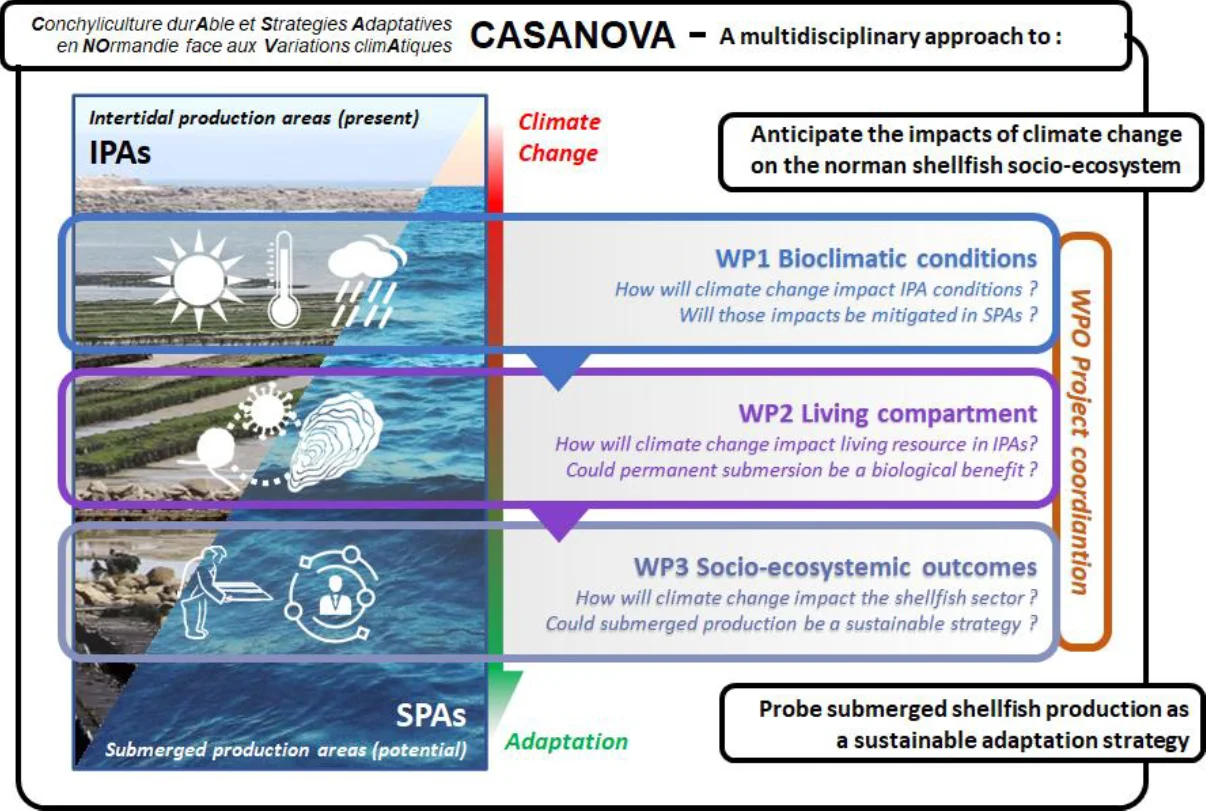
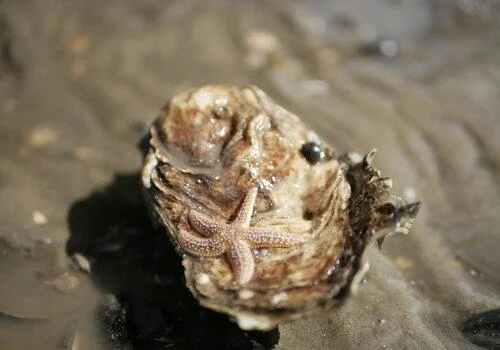
Climate change poses a significant threat to the shellfish socio-ecosystem, particularly in Normandy. Variations in temperature, pH, salinity, and oxygen levels directly affect oyster physiology. They also influence interactions with phytoplankton or pathogens, increasing risks for this keystone species. Intertidal zones, which currently serve as the primary production areas, are the most exposed to these disturbances.
Conversely, submerged offshore areas could offer a more stable environment, less sensitive to land-based runoff and tidal cycles.
The CASANOVA project proposes to evaluate whether these submerged zones can constitute a sustainable solution for oyster farming in the face of climate change.
The consortium will first study the current and future environmental conditions of intertidal and submerged areas. It will then analyze the biological resilience of oysters, integrating their physiology and the entirety of their interactions according to the holobiont concept.
The project will also include a socio-economic assessment of climate change impacts and potential adaptations for the sector.
Thanks to a multidisciplinary team, CASANOVA aims to produce new knowledge on the future of the Normandy shellfish socio-ecosystem. The results will also guide public policies to protect the resource and ensure the sustainability of the industry.