
Dr. Guillaume Rivière visits the UdeC as part of the BivalOMICS project
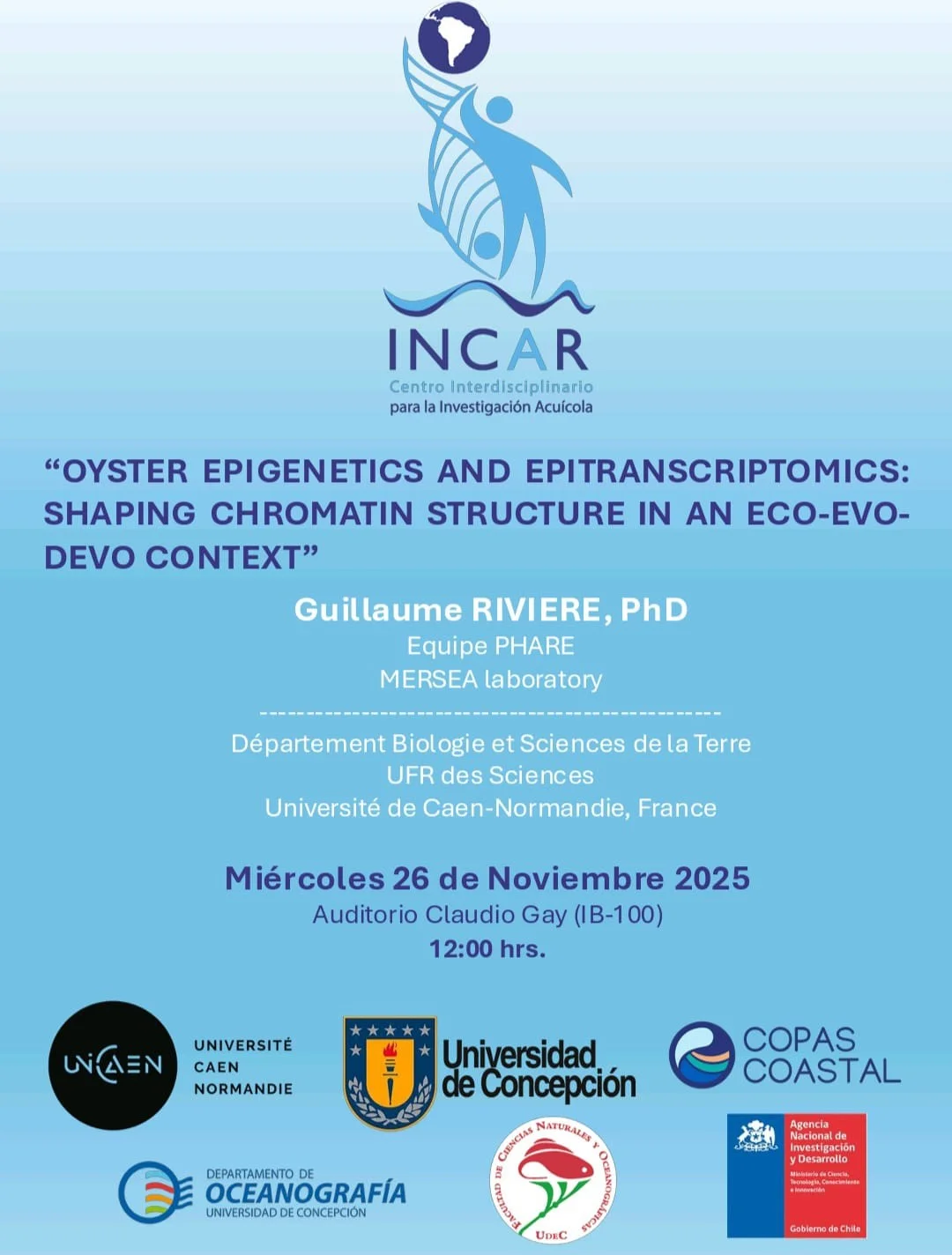
This Wednesday, November 26, Dr. Guillaume Rivière, a professor in the Department of Biology and Earth Sciences at the University of Caen-Normandy, France, will give a lecture entitled “Oyster epigenetics and epitranscriptomics: Shaping chromatin structure in an eco-evo-devo context” at the University of Concepción (UdeC).
The researcher is undertaking this visit within the framework of the ECOS ANID scientific cooperation “Understanding the Effects of Climate Change on Shellfish Aquaculture through Hologenomics (BivalOMICS)”, which involves researchers from the INCAR Center and UniCaen, and aims to understand the impacts of climate change on the marine microbiome and its contribution to critical ecosystem processes, with the goal of developing sustainable strategies for bivalve culture management and contributing to aquaculture diversification.
Participants in this initiative include the Deputy Director of the INCAR Center, Dr. Cristian Gallardo-Escárate, INCAR Associate Researcher, Dr. Valentina Valenzuela-Muñoz, Center Assistant Researcher, Dr. Diego Valenzuela-Miranda, Postdoctoral Researcher, Dr. Yeny Leal Acosta, Postdoctoral Researcher, Dr. Antonio Casuso, and INCAR postgraduate students, Constanza Sáez-Vera (PhD) and Marcelo Muñoz-Troncoso (Master’s). The project will span three years and will be led in France by Dr. Guillaume Rivière.
Ecos-Anid is an initiative launched in 2021 with the aim of promoting scientific cooperation and links between universities, research centers, and research institutes, public and/or private, in Chile and France. To this end, Anid finances the mobility of researchers, post-docs, and students (Master’s and/or PhD), with a focus on training advanced human capital.
The initiative will finance four grants per year for students from partner institutions, which will result in extended research stays abroad and the organization of bootcamps during the summer, where an international team of researchers will train postgraduate students and young researchers in genomic tools and their applications.
The seminar “Oyster epigenetics and epitranscriptomics: Shaping chromatin structure in an eco-evo-devo context” will take place in the Claudio Gay Auditorium of the Faculty of Natural and Oceanographic Sciences at the University of Concepción, starting at noon, and does not require prior registration.