“First insight into the regulatory role of the glycoprotein hormones GPA2 and GPB5 in the small-spotted catshark during spermiogenesis”
The latest article by JEANNE Fabian, a postdoctoral researcher and alumni student in our laboratory, who completed a PhD thesis on Molecular and Cellular Aspects of Biology (under the supervision of Pascal SOURDAINE, Professor at the University).
A French summary of this article, written by Pascal SOURDAINE:
“Glycoprotein hormones (GPHs) regulate essential physiological processes in vertebrates, such as growth and development, reproduction, and metabolism. GPHs include follicle-stimulating hormone (FSH), luteinizing hormone (LH), chorionic gonadotropin (CG), and thyrotropin (TSH). Each hormone consists of a common alpha (α) subunit and a specific beta (β) subunit (βFSH, βLH, βCG, or βTSH). More recently, a new GPH, thyrostimulin, was identified. It consists of an alpha subunit (GPA2) and a beta subunit (GPB5). During evolution, GPH diversification occurred at the root of the gnathostomes from two ancestral proteins, GPA and GPB, which are found in nearly all non-vertebrate bilaterians. These gave rise to the α and β subunits of GPHs, as well as GPA2 and GPB5. Chondrichthyans (sharks, rays, and chimaeras) are the first vertebrates to possess differentiated GPHs (FSH, LH, and TSH), in addition to GPA2 and GPB5 proteins.
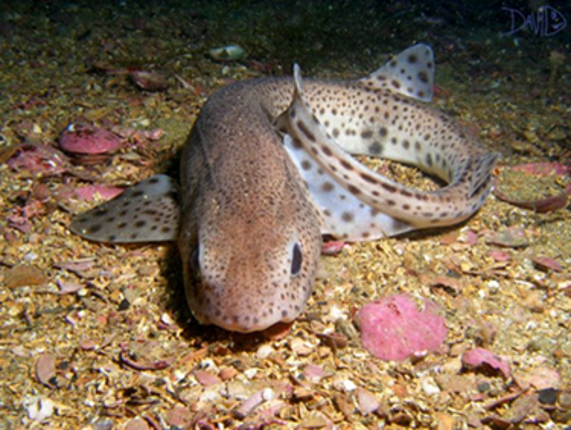
In this study, the testicular function of GPA2 and GPB5 was investigated in a shark, the small-spotted catshark (Scyliorhinus canicula, Sc). To this end, testicular explants containing spermatids were treated in vitro with recombinant ScGPA2, recombinant ScGPB5, or the protein corresponding to the two ScGPB5#GPA2 sequences. Comparative proteomic analysis of the treated explants revealed that ScGPB5 and ScGPB5#GPA2 were the most effective, modulating the abundance of 449 and 525 proteins, respectively. In contrast, ScGPA2 modulated only 212 proteins. Manual functional annotation of the 103 proteins showing the greatest differential abundance (mean Log2 ratios of 2.5 and −2.5) linked these proteins to spermatogenesis and immunity. Key proteins and candidate proteins involved in spermatogenesis were identified, including SPINK2, which is involved in acrosome protection, and LRRC69, which is associated with spermatogenic failure in humans.
To our knowledge, this study is the first to report the effects of stimulation with recombinant ScGPA2, ScGPB5, and ScGPB5#ScGPA2 proteins on vertebrate testicular tissue in vitro. This article highlights the importance of functionally characterizing GPA2 and GPB5 by providing the first results aimed at elucidating their role in spermatogenesis in a species of evolutionary interest, the small-spotted catshark. In the future, a comprehensive characterization of GPA2 and GPB5 will further our understanding of the functional evolution of glycoprotein hormones, which are essential hormones for vertebrate physiology.”