“This little Australian worm clinging so tightly to the port of Honfleur…”
Thanks to Esteban Pinel, journalist at Le Parisien, for this article published on April 20, 2026, after the latest Maritime Event Café this March 26 :
“Nicknamed “the Honfleur itch,” this worm has found a haven in the Norman port, where it creates cumbersome reefs that cling to boats and pontoons. A nuisance for sailors—and an ecological refuge as well.
A great explorer of the 20th century, just a few centimeters long. In Honfleur especially, Ficopomatus enigmaticus feels right at home in the bulky calcareous reefs it secretes itself. This Australian worm was “first observed in Europe in 1921, in the Caen Canal to the sea, probably introduced at the larval stage through the discharge of ships’ ballast water,” explains Katherine Costil, Mersea researcher at the University of Caen. This scientist gave a conference on these exotic species found in Norman ports at the end of March.
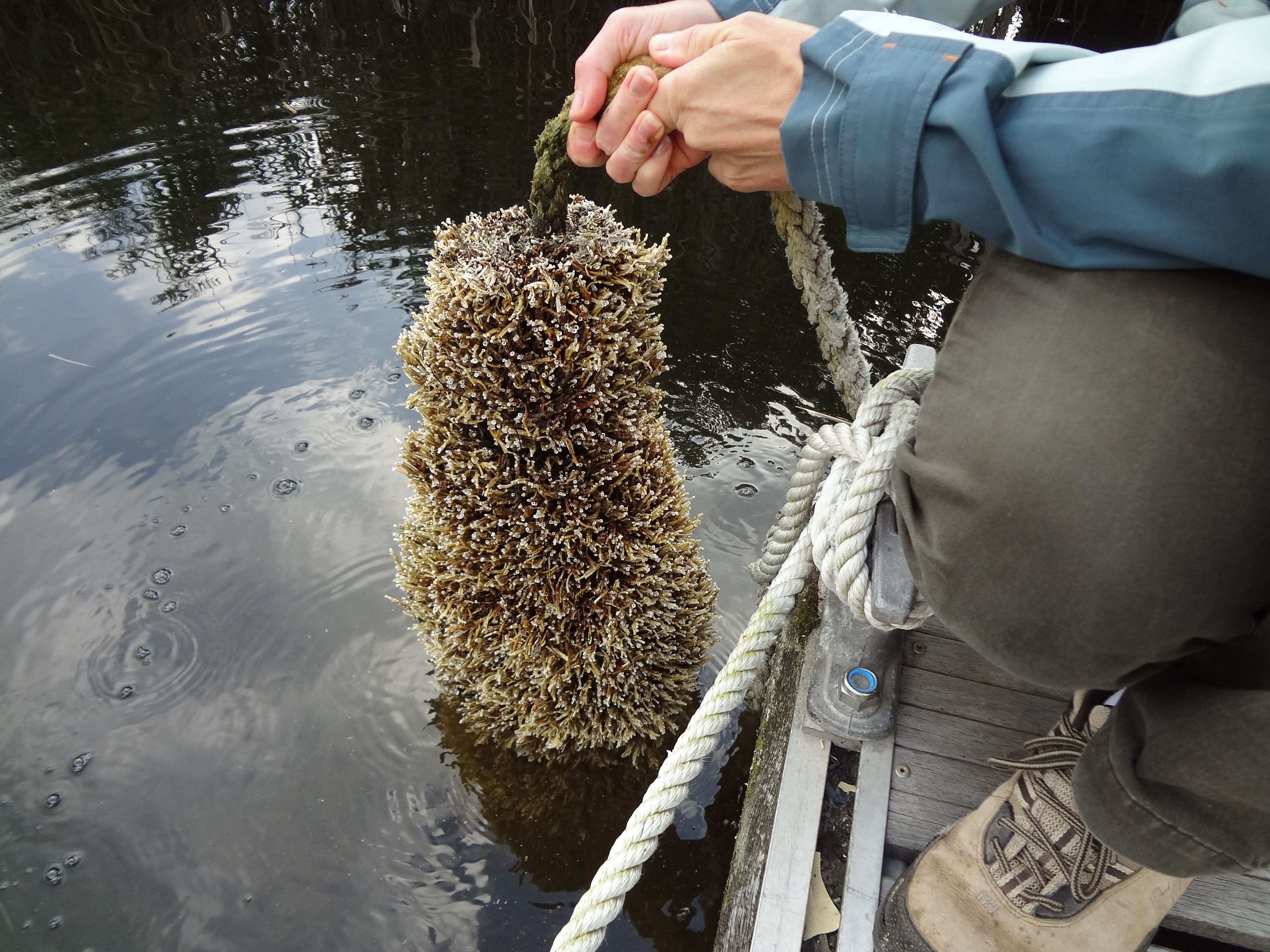
In Honfleur, not a scientific name but rather an unflattering nickname: the worm is called “the Honfleur itch.” “Sailors, fishermen—everyone, we’re told at the nautical center. It clings to rudders, propellers, and hulls.” Attached to pontoons and even the quay walls. “The larvae settle in one place and attract each other. It’s a gregarious species. The worms secrete calcareous tubes in which they live. This forms interwoven masses,” describes Katherine Costil. “In Honfleur, they can reach up to 40 cm and collapse under their own weight.”
These coral-like structures are a real headache for humans. “As soon as a boat isn’t regularly maintained, it can latch on and grow. When the vessel is dry-docked, it has to be scraped off,” grumbles a sailor. Boats that remain moored for long periods in the harbor basin, rarely going out, are particularly exposed (as are port facilities). In 2020, an old shrimp fishing boat made an impression when it was taken out of the water for restoration: its hull was heavily colonized…
Small animals find refuge there
Why is Honfleur particularly affected? Researchers from the Mersea laboratory investigated Norman ports and identified the Australian worm in Caen (in small quantities), Carentan, Courseulles-sur-Mer, Ouistreham, and, of course, Honfleur. “We notice that water salinity plays a role in its presence. In Honfleur’s basin, the water is not very salty. It’s a species that thrives in low to moderately saline environments,” explains the researcher. Ficopomatus enigmaticus also prefers calm waters. For example, it is not found in the Orne estuary, where tides alternate between saltwater and freshwater.
Its presence, however, is a boon for small animals that find shelter in the reefs created by the worm—such as small crabs. Researchers have identified 15 species within the calcareous masses in Honfleur. A contributor to the problematic phenomenon of biofouling (the accumulation of microorganisms on submerged surfaces such as boat hulls), the worm and its tubes also provide some ecological benefits. Structural issues along the quay in Honfleur, with the risk of building collapse, led to the evacuation of many boats from the old harbor basin. Could this disturb the peace of the Australian explorer, at home here for more than a century? Hardly—it is resilient, and will likely continue forcing Honfleur’s sailors to scrape it off…”